The Gatekeepers and the Glass Ceiling, Notes Toward an Essay on The Count
“The gatekeepers of literary culture—at least at magazines—are still primarily male.” If these gatekeepers are showing a gender bias, there’s not much room to make it up later.
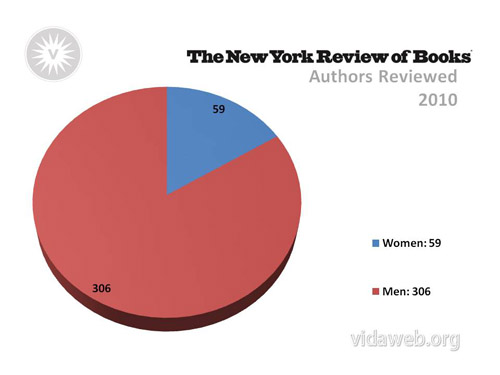 Let’s make something very clear: no one wants to be in the position of having to have these conversations. Particularly women. Women and whoever is outside of these gates. They are a bother. They detract from one’s work. One’s important work. They make the person doing the banging on the door seem shrill. They remind the person doing the pointing that they are outside. They affirm to those being barked at that they are inside. They allow the object of the complaint to indulge in that slightly hurt, eye brow raising gesture that is reflected in the eyes of their loyal affirmers. I can see the editors of the LRB and NYRB etc., swiping the nattering voices away with a rolled up copy of their weighty and important rags… Don’t bother us with your petulance. We have important reviews of important books to attend to. We are keeping culture alive single-handedly.
AN ALL WOMEN’S ISSUE IS NOT THE ANSWER
Seriously. If you are a major literary journal purporting to speak to an entire field, don’t bother with the special issue. If you’re planning this, don’t. Also don’t bother with the Asian issue, or the Writers of Colour issue, or the new Muslim writers issue either. That’s fine for smaller literary journals. And it’s essential for introducing us to new work, but these volumes often get lopped off. They are too easily cast aside. And as a serious, national or international journal you are right to take the books you discuss seriously. So, if you’re serious about looking to review and discuss the best, most important writing, then learn to look for the best, most important writing being published, not just what you know to be good in your small circle. Good writing is often not right under your nose, and it often does NOT look remarkably similar to your tastes, your life, or the last book you read. It might not reflect your experience at all. You might, look as long as you like, not see yourself represented there very well, if at all. It might even, shockingly, make you rethink what you think good or important is. You might even discover a new voice and bring readers to it…
If you aren’t speaking with women, you aren’t thinking of them, you aren’t reviewing them, you aren’t supporting them. Call him on it.
 I don’t think that any one solution will solve the problem. Not by any means. It’s complicated, and reflects deeply entrenched reading habits. I think a multi-pronged approach is in order, and mentoring is one of those prongs. Role-modeling is the most effective mentorship to my mind. It’s cliche perhaps, but being the change you want is a great start. (In other words, don’t remain silent, do comment publicly and where it matters, do push discussions in interesting ways, don’t get cornered into defensive positions, take risks, think big.)
Laugh baby. In the face of the worst of it, keep your humour. Every time a woman loses sleep over this stuff an angel gets the clap…or something like that. Think Sarah Silverman. Think Tina Fey (Crazy in Hollywood means a woman who keeps talking after you don’t want to fuck her…), Rebecca Solnit. Hell, think Stephen Fry, but maybe not Rob Delany (though I don’t know, if a woman had a package like that she could get reviewed…).
BIGGEN YOUR IDEAS
–Sina Queyras, Montreal
Articles on The Count
—http://vidaweb.org/category/
1.) The Lack of Female Bylines in Magazines Is Old News – Katha Pollitt @ Slate
— http://www.slate.com/id/
2.) Being Female — Eileen Myles @ The Awl
— http://www.theawl.com/2011/02/
3.) How To Publish Women Writers: A Letter to Publishers about the VIDA Count — Annie Finch @ Her Circle
—http://www.hercircleezine.
4.) ‘Numbers don’t lie’: Addressing the gender gap in literary publishing — Jessa Crispin @ PBS
—http://www.pbs.org/wnet/
5.) On breaking the literary glass ceiling — Jessa Crispin and Michael Schaub @ PBS
—http://www.pbs.org/wnet/
6.) Why There’s Gender Bias in Media-and What We Can Do About It — Margot Magowan @ MS. Magazine
—http://msmagazine.com/blog/
7.) Women in Publishing: What’s the Real Story? — Kjerstin Johnson @ Bitch Magazine
—http://bitchmagazine.org/
8.) Women Get Published and Reviewed Less Than Men in Big Magazines, Say Red-and-Blue Pie Charts — Jim Behrle @ The Hairpin
—http://thehairpin.com/2011/
9.) Bitches Be Trippin’ — Roxane Gay @ HTML Giant
—http://htmlgiant.com/random/
10.) The Sorry State Of Women At Top Magazines — Anna North @ Jezebel
—http://jezebel.com/5750239/
11.) Gender, publishing, and Poetry magazine — Christian Wiman @ Poetry Foundation
—http://www.poetryfoundation.
12.) VIDA: The Count Roundup @ The Rumpus
—https://therumpus.net/2011/
13.) Why It Matters That Fewer Women Are Published in Literary Magazines — Robin Romm @ Double X
—http://www.doublex.com/blog/
14.) Women at Work — Meghan O’Rourke @ Slate
—http://www.slate.com/id/
15.) The Numbers Speak For Themselves @ Women and Hollywood
—http://blogs.indiewire.com/
16.) Do četiri puta manje tekstova žena! — BROJKE NE LAŽU @ Kultura (in Croatian)
—http://www.tportal.hr/
17.) Submitting Work: A Woman’s Problem? — Becky Tuch @ Beyond the Margins
—http://beyondthemargins.com/
18.) On Gender, Numbers, & Submissions — Rob @ Tin House
—http://www.tinhouse.com/
19.) A Literary Glass Ceiling? — Ruth Franklin @ The New Republic
—http://www.tnr.com/article/
20.) Research shows male writers still dominate books world — Benedicte Page @ The Guardian
—http://www.guardian.co.uk/
21.) Gender Balance and Book Reviewing: A New Survey Renews The Debate — Patricia Cohen @ New York Times Arts Beat
—http://artsbeat.blogs.
22.) Tickets to an Awesome Future Are Free: Gender, Literature, and VIDA’s Count — Carolyn Zaikowski
—http://monkeypuzzlepress.
Comments are closed.